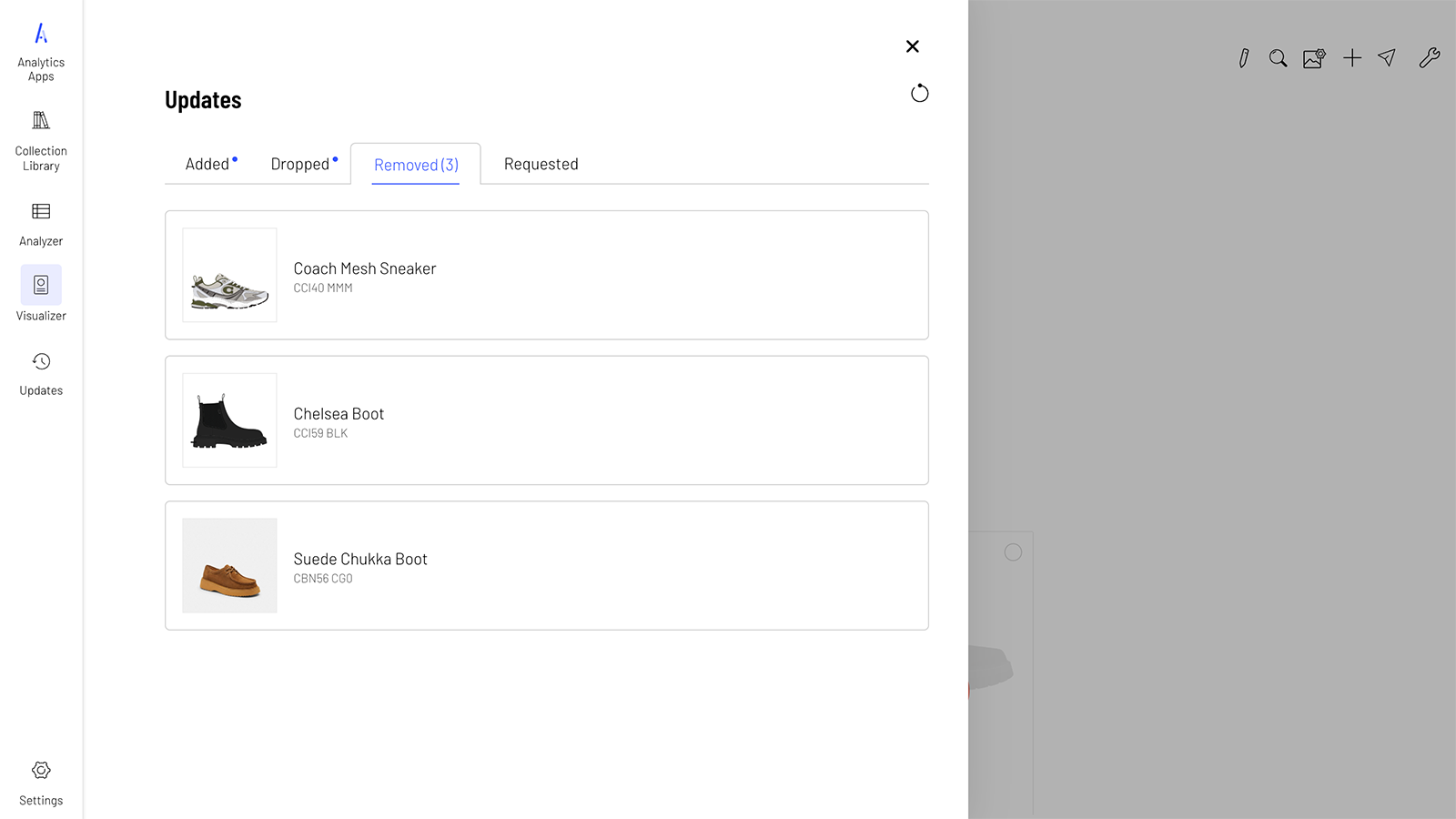

On the left is a screenshot of the feedback loops modal. On the right is an example from 2023 of an Excel change log.
Collection Curator is in an in-house platform at Tapestry that allows for departments all along the merchandising pipeline to collaborate with each other. It supports creating SKU (stock-keeping unit) lists, visual assortments, and a host of data analytics features.
Currently, Collection Curator is being used by the buying, merchandising, and wholesale departments at Coach and Kate Spade. This means that it currently assists users to create SKU assortments leading to over $5 billion dollars in sales.
This particular feature allows merchants and buyers to see important SKU changes that their partners are making.
Please contact me to see an in-depth case study of this feature.
Throughout the product development timeline, there are many SKU info changes to the collections that buyers and merchants are working on. These changes can include revisions on data points like price, color, SKU code, and intro date. All of those things can drastically affect a user's SKU list and their strategy.
Before Collection Curator, buyers and merchants were keeping track of all those change manually in an Excel sheet. The number of changes could easily get to be over a hundred, and the Excel sheets is a big work driver. Both merchants and buyers need an accurate and thorough record of these changes. Users have consistently asked for something in Collection Curator that could alleviate this tedious process.
In a previous cycle, we had designed a feature called feedback loops, which helps buyers be informed of changes that the merchants have made. These changes were limited to informing users of added SKUs, dropped SKUs, and removed SKUs. Feedback loops also included the ability for buyers to request SKUs, and for merchants to act on that request.
The change log feature is meant to build on that work, expanding it to be even more useful. The technical constraints that we discovered when building feedback loops were important to keep in mind for change log, too.
How can we inform buyers and merchants of changes in the collections they're working on?
Buyers and merchants want to be notified on a regular schedule of changes within the collections they're working on, especially at the SKU level. The SKU info changes should be in a place that the user would already check. This feature should cut down on their time manually keeping track of these changes, and help them build a better line list with updated, accurate information.
The main goals that we hoped to achieve with this feature are as follows:
Notifications
· Support notifications to users on a regular basis
· Determine what form notifications should be in. Email? In-app?
· Support notification settings according to user preference
Updates
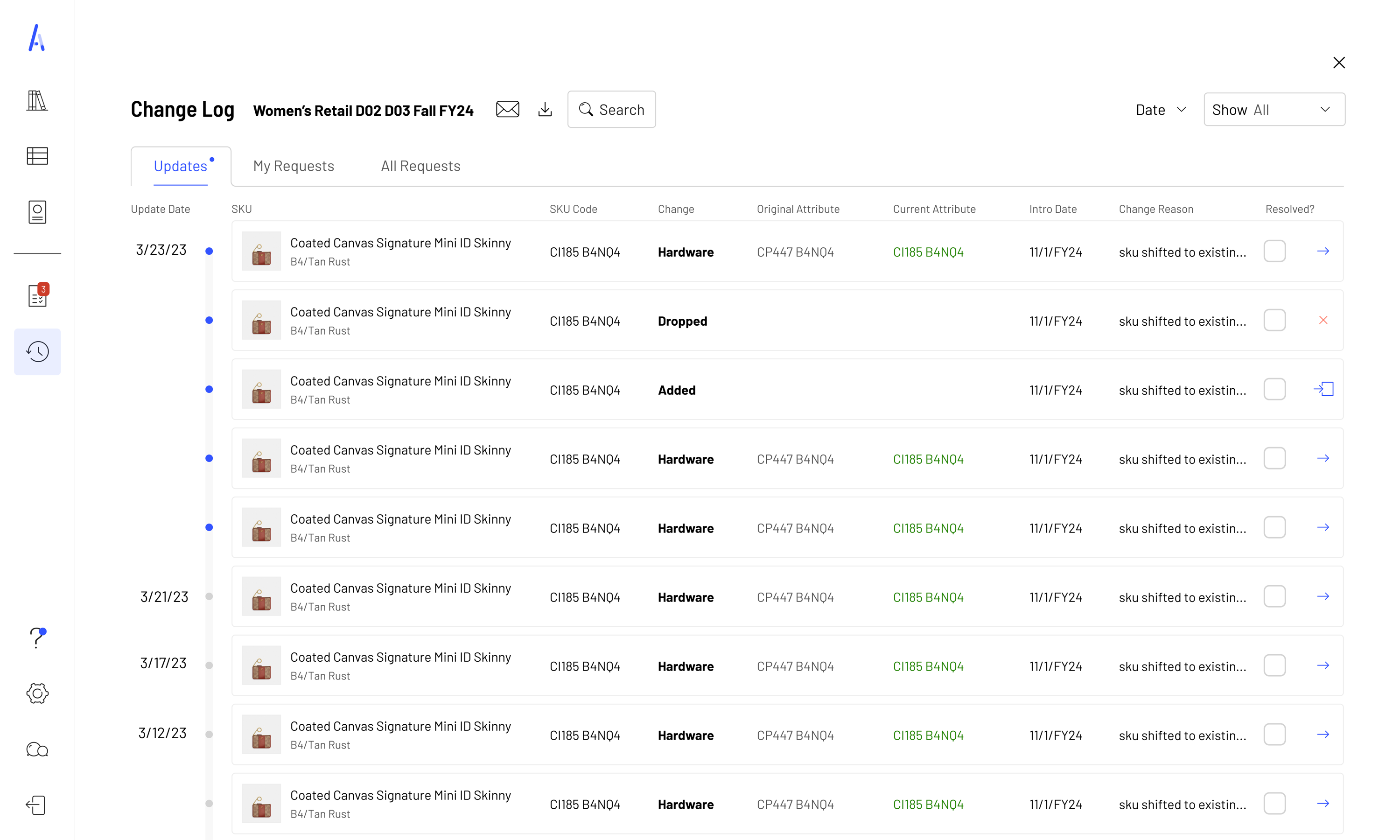
· Enable users to easily understand what changes have occurred in their line lists
· Changes will be listed chronologically
· Expand the updates present in feedback loops to include more details and types of changes
SKU Requests
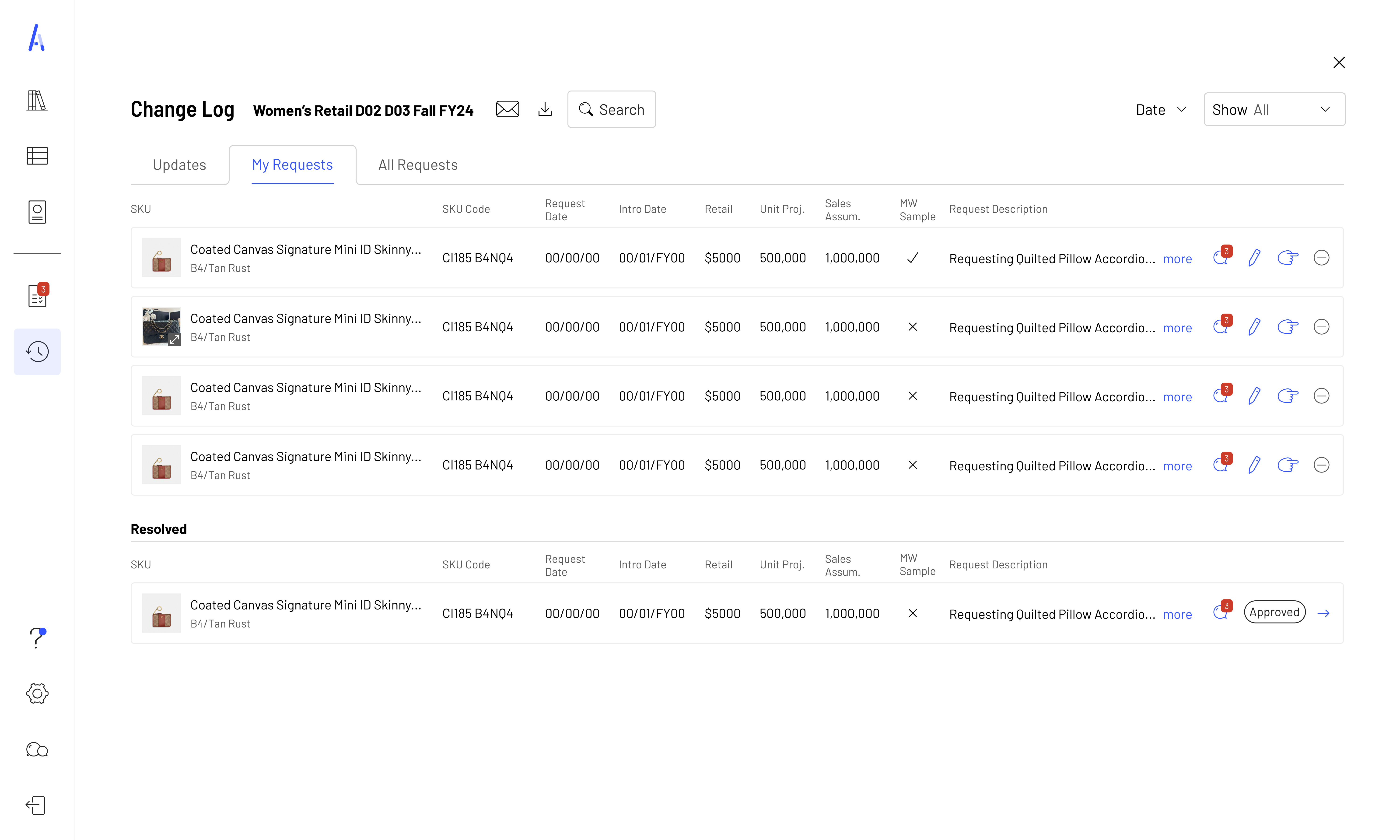
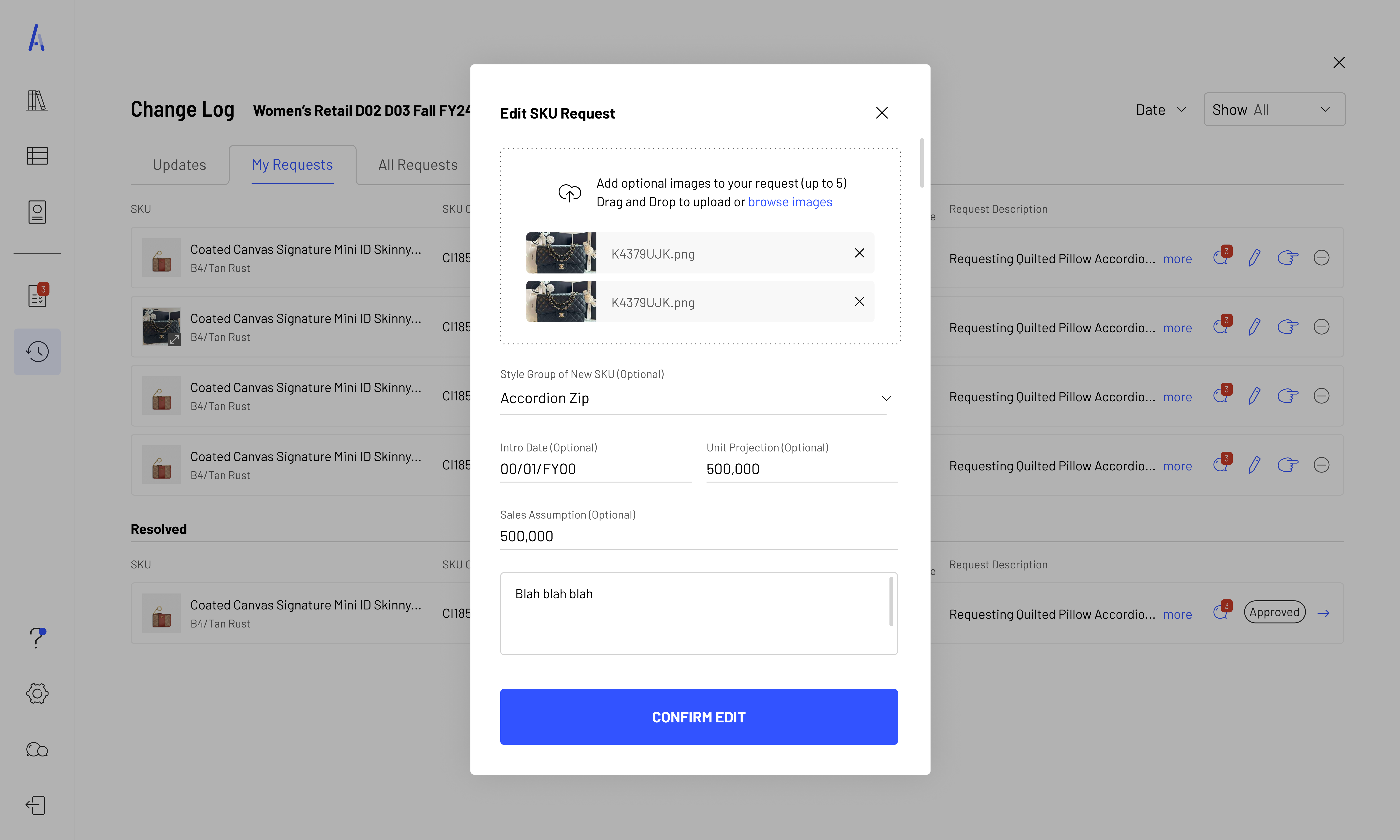
· Expand the SKU request feature present in feedback loops to include more details
Automation
· SKU info changes will pull automatically from our databases, ECV and RPAS
· Eliminate tedious manual work for the user
.png)
Updates
Buyers and wholesalers can see SKU info changes that come from their merchant partners. Depending on what has changed, they can take actions like deletion on the SKU change. Merchants also have an updates tab, to keep track of the changes that they have made in ECV. They are able to add a change reason to explain to their partners why a SKU has changed.
SKU Requests
Buyers and wholesalers can request that a SKU be added to a merchant's collection. Merchants can approve or deny requests directly in the modal. All users can keep track of everyone's requests, for better visibility.
Email Notifications
Buyers and wholesalers will get an email summary of the changes that have occurred. Merchants get notified if they have received a new request. All users can adjust email cadence and select what kind of updates they want to receive.
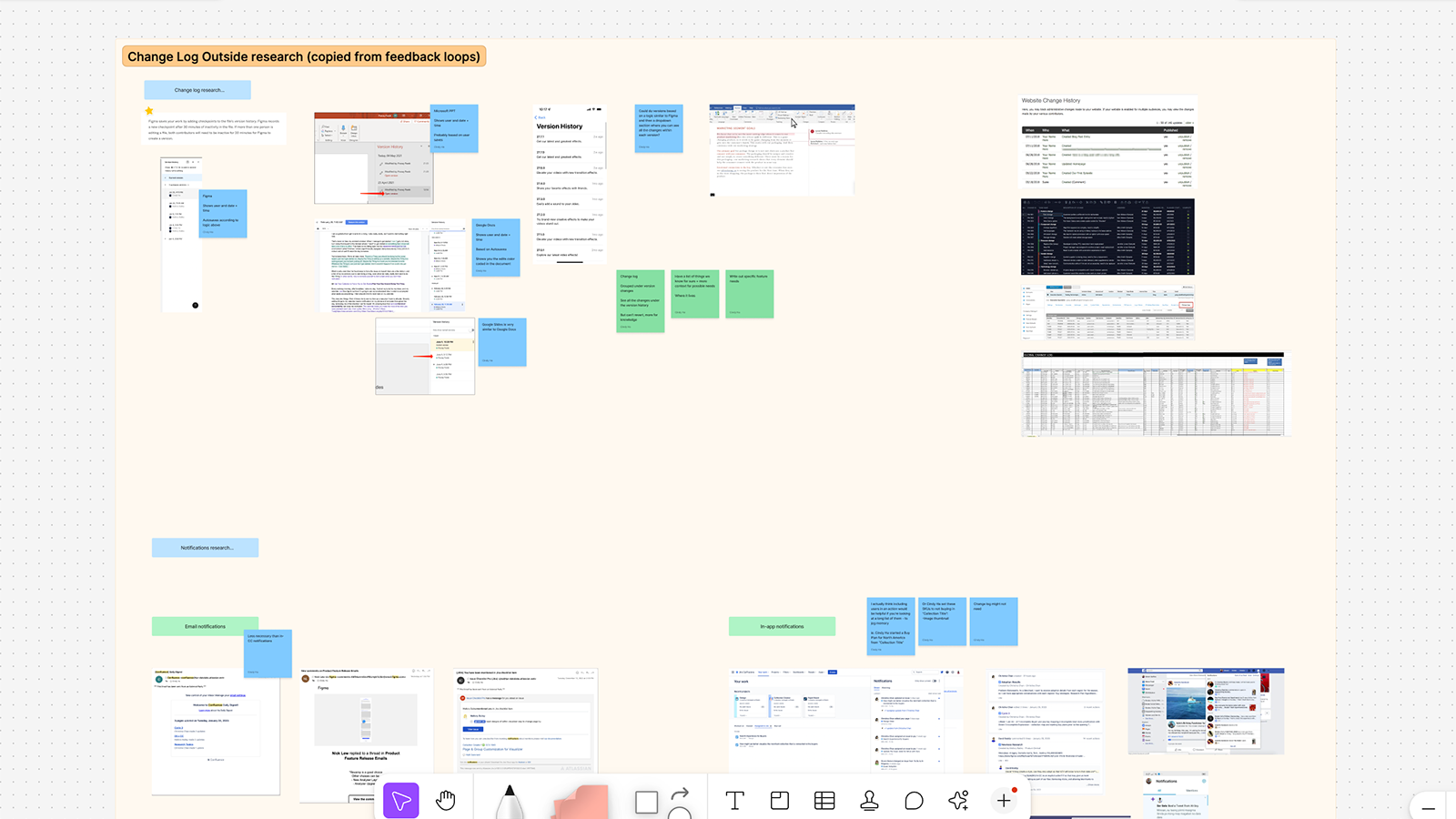
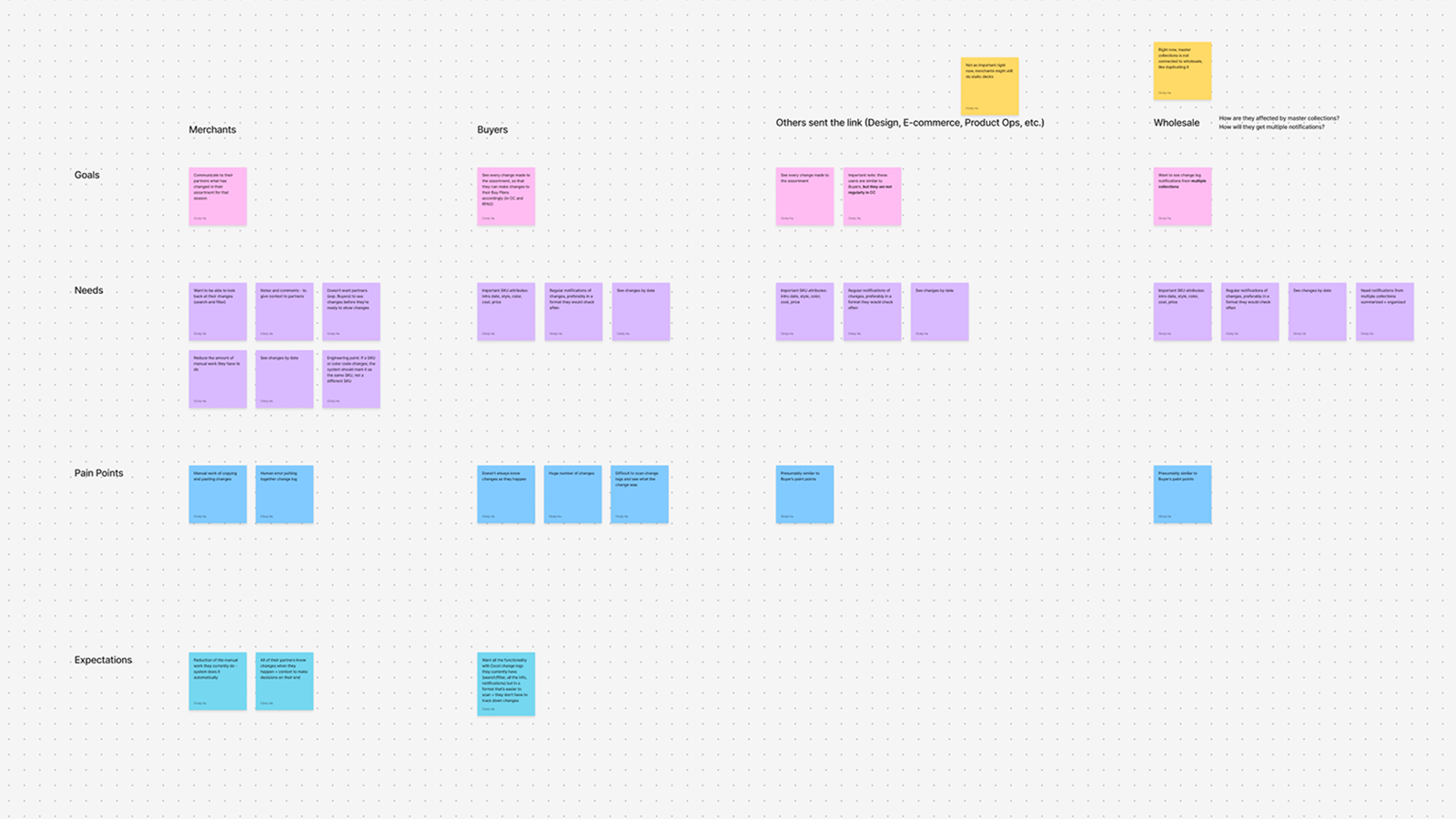
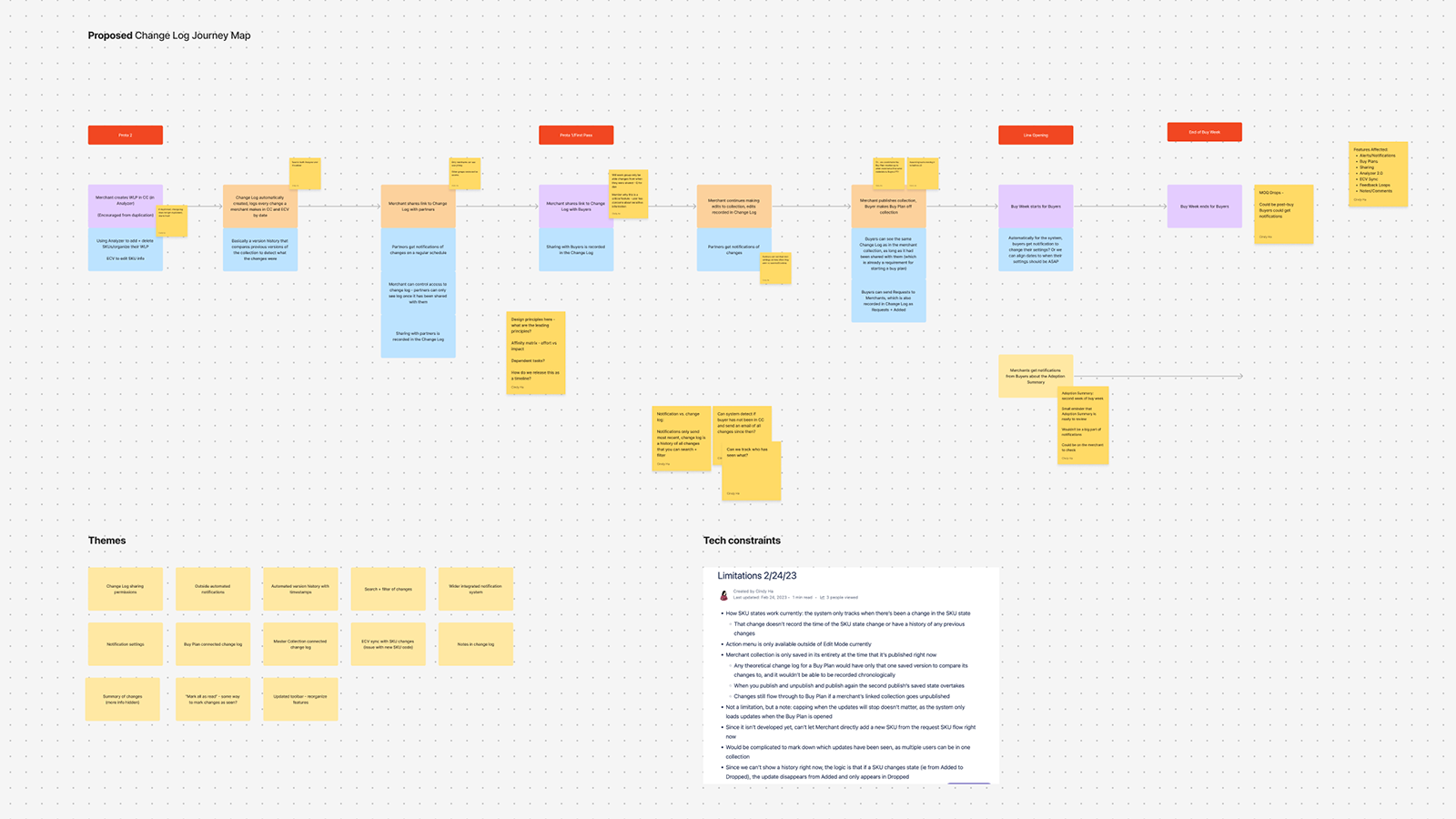
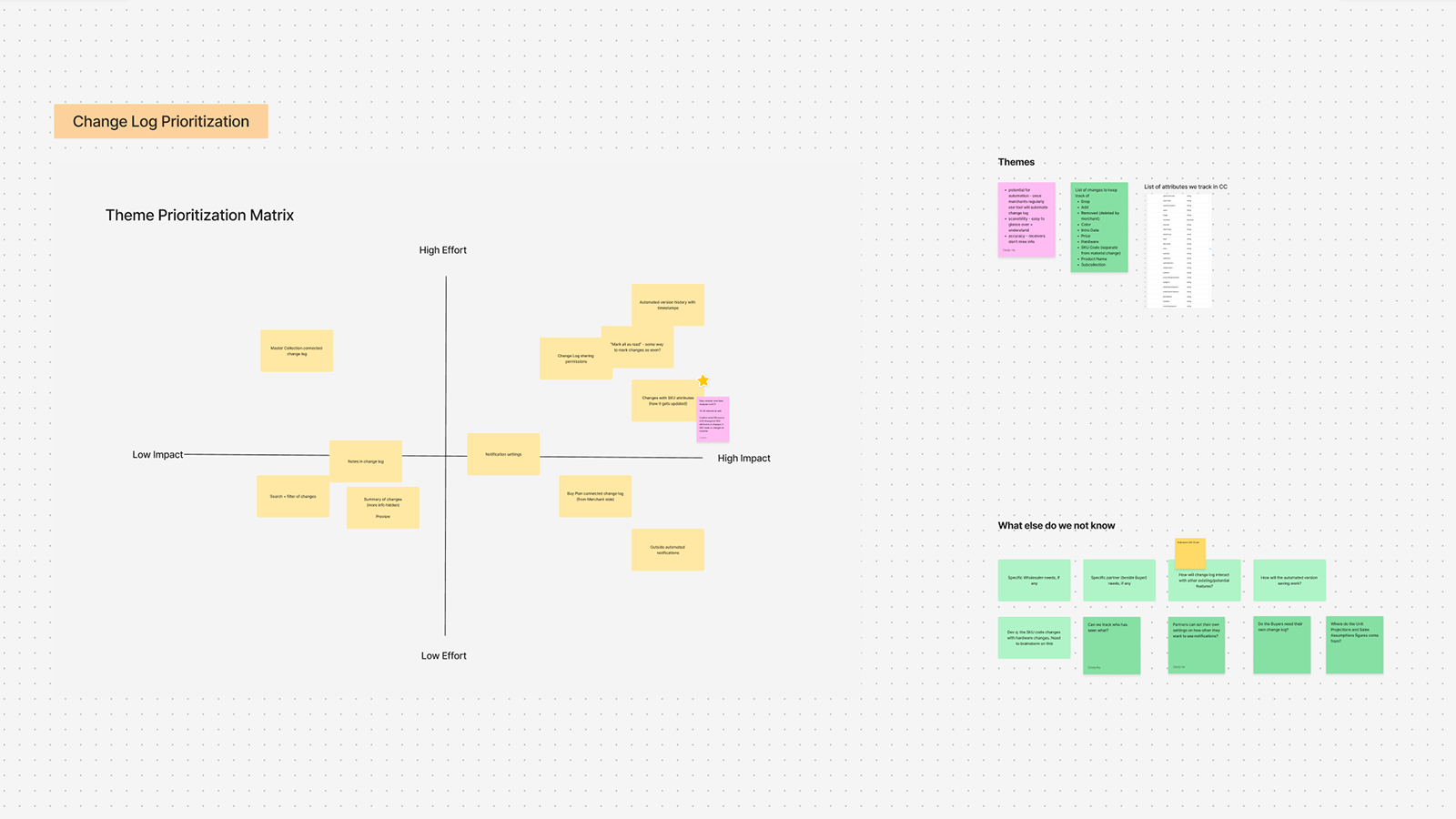
Since this project was fairly open-ended, I spent a lot of time figuring out what form the feature should take. I spoke with teams from all around the world, and consolidated their goals, needs, pain points, and expectations. They already had a workflow that they were familiar with, so one question we kept asking was: how does our proposal improve on what they have?
I also prepared journey maps and prioritization matrixes so we had concrete documents to explain the scope of the feature to product and engineering.
Within a tech-adverse industry like fashion, it's hard to get users to want to switch to something new over what they already know. This is true even if the old system is a huge time suck. To get buy-in from our stakeholders, we had to make sure to show them wireframes and presentations that truly addressed their needs and got them excited about the possibilities.
Another factor we had to consider was that the Excel change logs are massive and hold lots of information. But, after talking to our users, it turns out they don't use all of it and find it overwhelming. So a challenge here was to condense a large table down to only the most necessary parts, while still giving them the function they need.
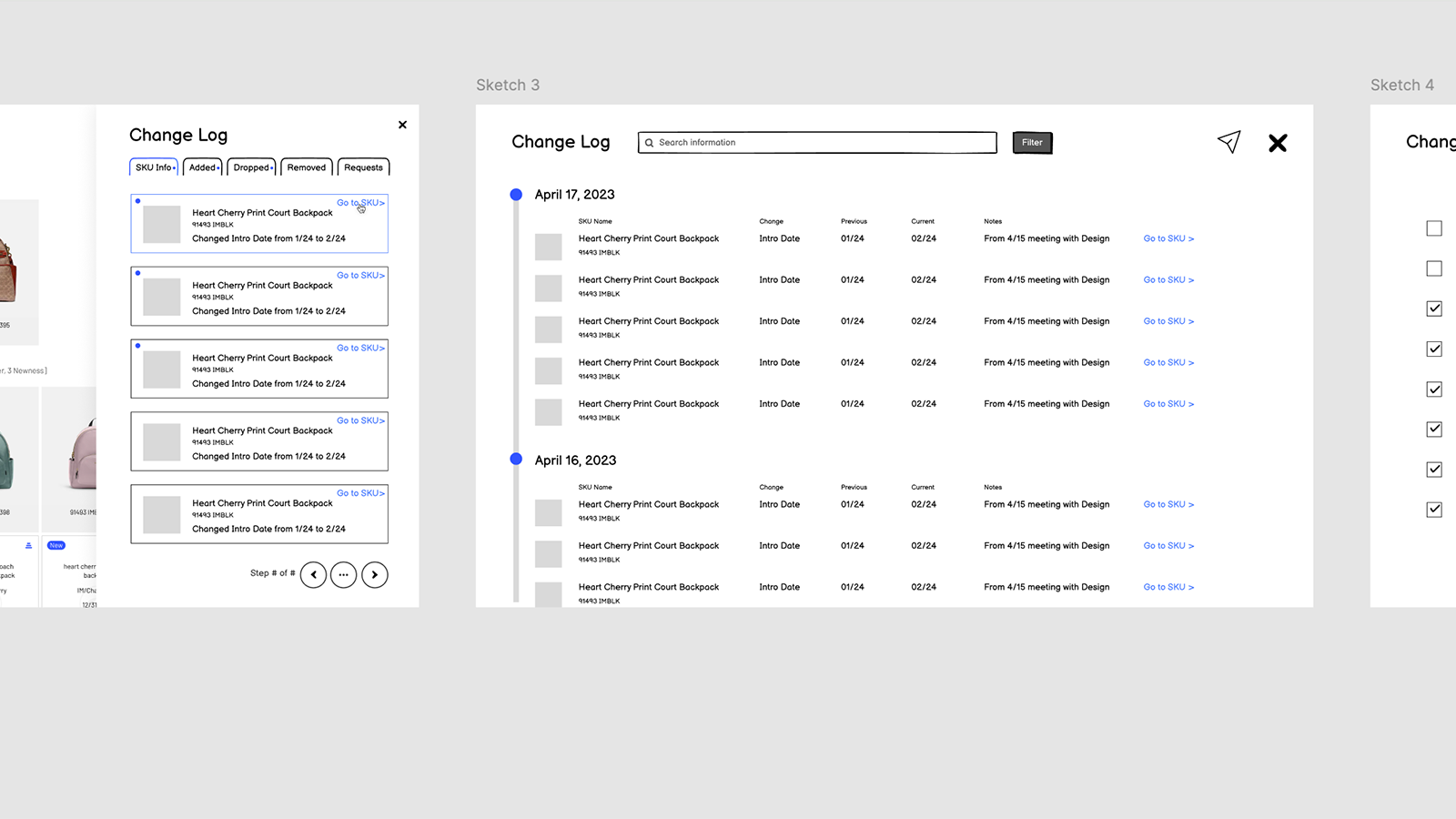
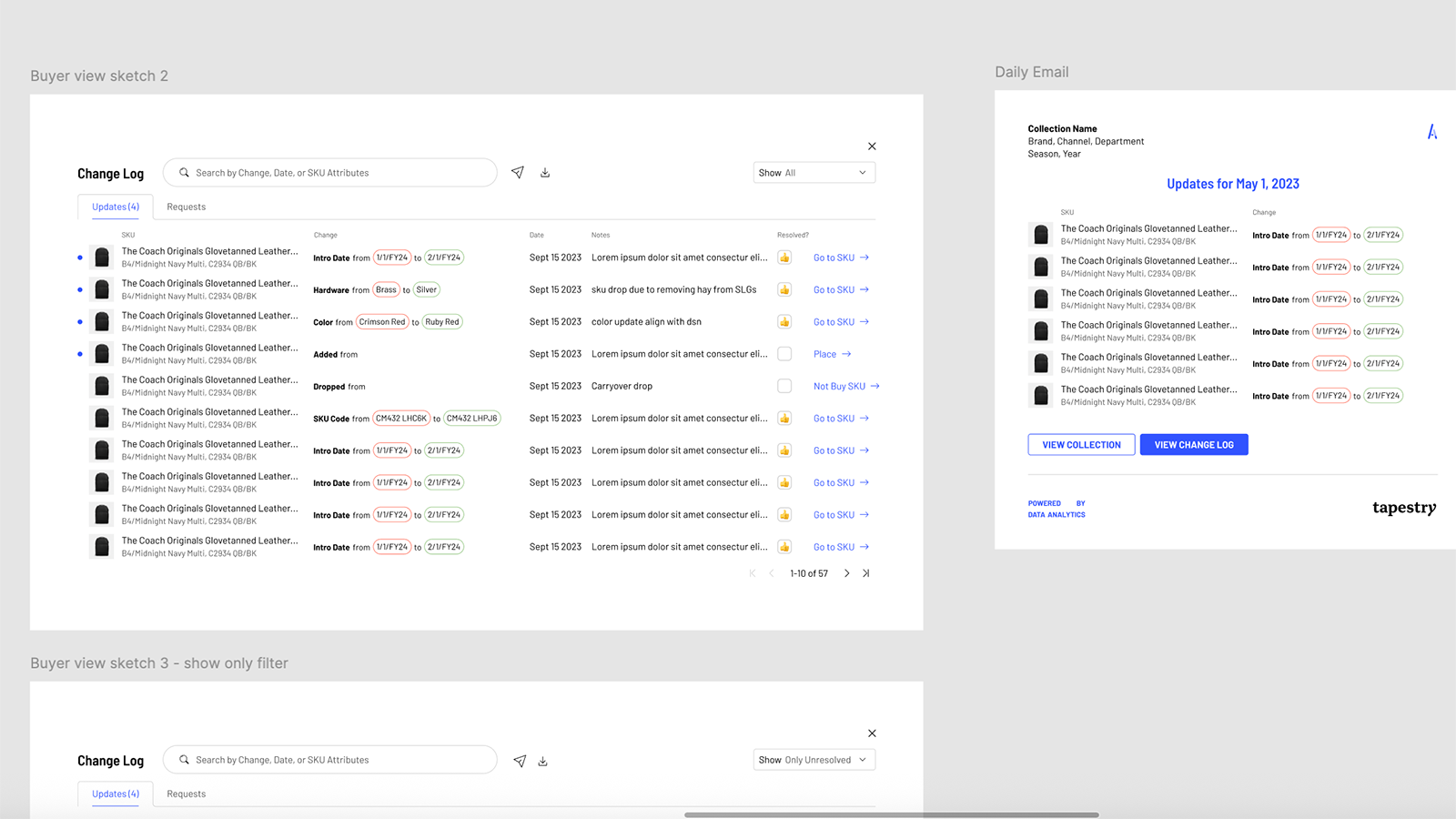
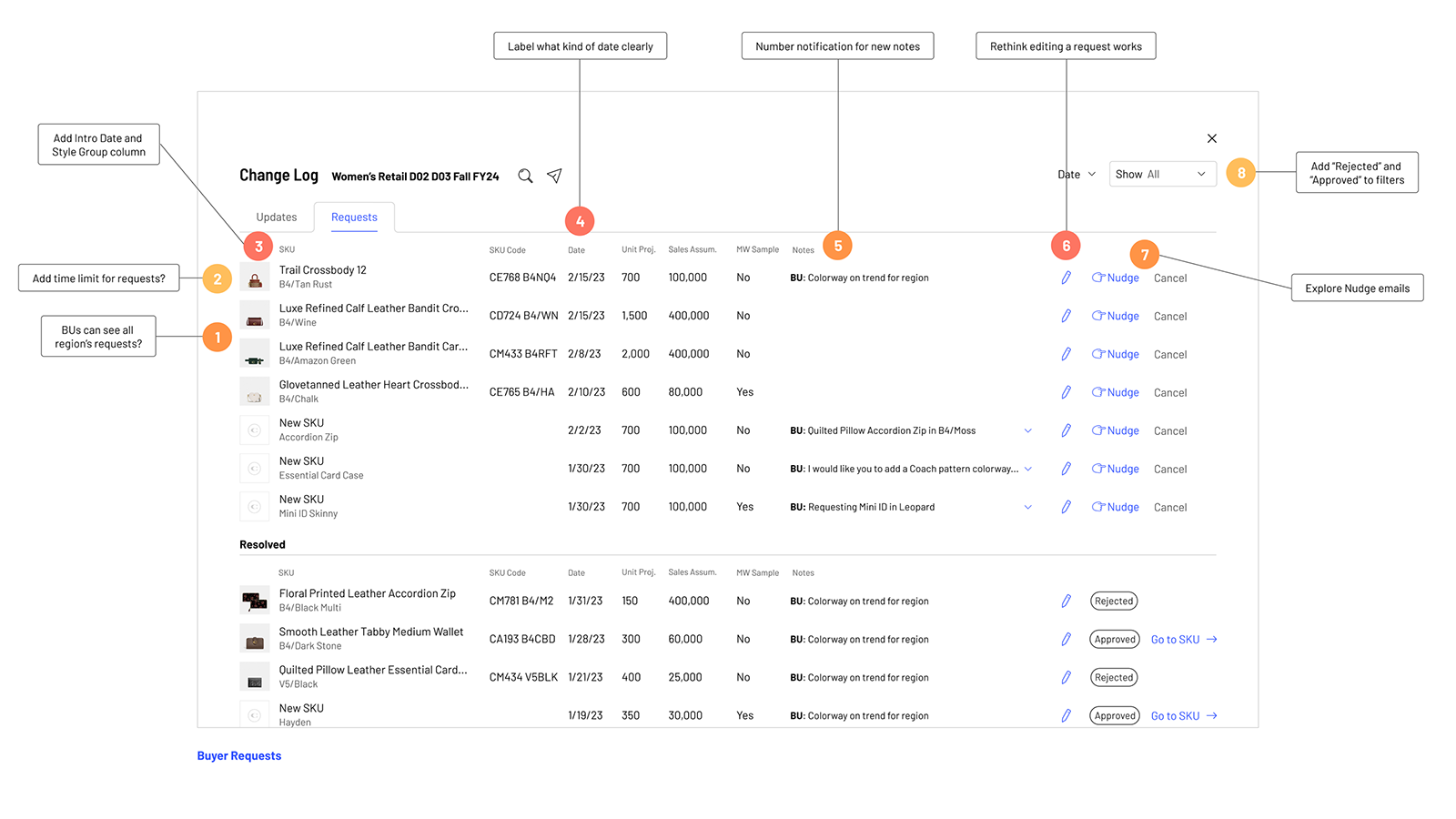
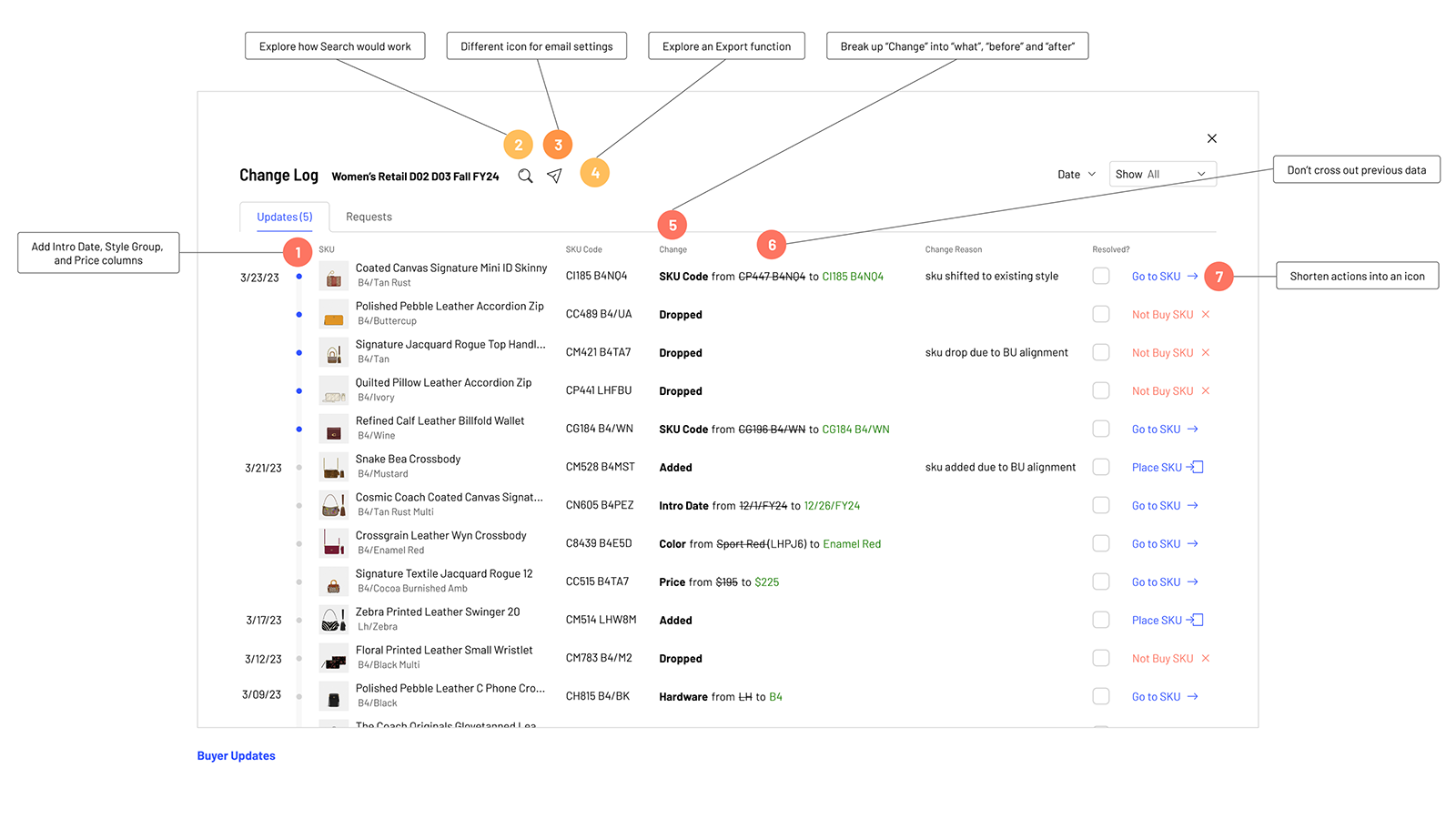
Because this feature was originally a user request, users were very invested in its progress, and we were able to have many rounds of feedback with them. One important learning we had was that our users were able to give much more detailed feedback if we presented them with a prototype versus a static set of screens.
Unfortunately, shifting priorities meant that this project ended up being sidelined. Since it would've required a large engineering effort, it kept getting delayed. Although it was never developed, I'm still proud of the work I did.